When discussing crime scene cleanup, misinformation often clouds the realities of this critical service. Whether depicted inaccurately in pop culture or misunderstood due to the sensitive nature of the work, these misconceptions can lead to unnecessary stress, false expectations, or even dangerous decisions. Today, we’ll debunk the top five myths about crime scene cleanup, shedding light on what it truly entails and why it’s a job best left to professionals.
A common belief is that police officers or forensic investigators are responsible for cleaning up a crime scene once their work is complete. However, the truth couldn’t be further from this assumption. Law enforcement’s role ends with securing the area and gathering evidence. Once they leave, the responsibility of cleaning and restoring the space falls to the property owner or tenant.
This is where professional crime scene cleanup services come in. Specialists in this field are trained to handle the biohazard dangers left behind, such as blood, bodily fluids, or other potentially infectious materials. Attempting to manage this without professional help can pose severe health risks and may even violate local regulations.
While cleaning blood is a significant part of crime scene cleanup, it’s not the only component. Depending on the nature of the incident, cleanup may involve removing other biohazards like tissue, chemicals, or contaminated personal items. Beyond biohazards, professionals also address invisible threats, such as airborne pathogens and lingering odors.
For example, in cases involving unattended deaths, decomposition can produce harmful bacteria and overwhelming smells that require specialized tools and techniques. Professionals use industrial-grade disinfectants, ozone treatments, and air scrubbers to ensure the environment is safe and livable again.
Many people believe that cleaning up after a traumatic event is no different from regular household cleaning. However, crime scenes present unique challenges that require more than just bleach and elbow grease. Biohazards carry pathogens like hepatitis and HIV, and improper cleaning can lead to exposure and contamination.
Certified crime scene cleanup technicians follow strict protocols set by organizations like the Occupational Safety and Health Administration (OSHA). They wear personal protective equipment (PPE), use advanced cleaning tools, and dispose of hazardous materials according to state and federal regulations. Without these precautions, the risks to both the cleaner and future inhabitants of the property are substantial.
Another pervasive myth is that crime scene cleanup costs are prohibitively high, leaving many to consider doing it themselves. While professional services do come with a price, they are often more affordable than people anticipate. Costs vary depending on the complexity and size of the cleanup, but many insurance policies cover these expenses, particularly in cases of accidental death or crime.
Additionally, attempting to do the cleanup yourself can lead to higher costs in the long run. Improper cleaning might result in lingering contaminants, requiring professionals to come in later anyway. By hiring experts from the start, you ensure the job is done thoroughly and efficiently, saving time, money, and peace of mind.
There’s a perception that those in the crime scene cleanup industry must have hardened hearts or be desensitized to tragedy. However, the opposite is often true. Professionals in this field approach their work with deep compassion and respect for the families and individuals impacted by these events.
Crime scene cleanup isn’t just about cleaning; it’s about helping people move forward after difficult experiences. Many professionals go above and beyond to ensure the emotional well-being of their clients, providing reassurance and offering support during a challenging time. Their ability to bring order and cleanliness to a traumatic scene not only restores the property but also helps bring a sense of closure to those affected.
These myths highlight why it’s so important to rely on professionals for crime scene cleanup. Trained technicians not only have the expertise and equipment necessary to handle complex, hazardous situations, but they also bring empathy and respect to their work. Choosing a qualified provider ensures that the job is done safely, effectively, and with care.
If you’re facing the aftermath of a traumatic incident, remember that you don’t have to handle it alone. Professional crime scene cleanup services are here to support you, allowing you to focus on what matters most – taking care of yourself and your loved ones.
Bio-One is always ready to react to unanticipated events like death, major accidents, and hazardous situations. In the following areas of New York we provide cleaning and restoration services:
Bio-One is the finest choice for assisting victims and their families if a suicide, homicide, unattended death, crime scene, or traumatic situation occurs. In addition to emergency services, Bio-One, a locally-owned company, also offers biohazard cleanup services for commercial and residential properties.
We understand that biohazardous material can be a great source of stress for property owners, so we work quickly and efficiently to minimize the disruption it causes.
We collaborate with local law enforcement, neighborhoods, emergency services personnel, victim support organizations, hoarding task forces, apartment complexes, insurance company carriers, and others to provide the best service possible.
Our sewage backup cleaning service is available for you or anyone you knows needs it. We have the expertise and equipment to remove and safely dispose of any clutter, debris, and garbage from your home or office. Give us a call at 585-575-0793.

Supporting a loved one who struggles with hoarding can feel overwhelming, especially if you’re unsure how to begin. When emotions run high, it’s easy to unintentionally say or do something that may push them away, even if your intentions are good. The key to offering effective hoarding help is understanding how to approach the situation with sensitivity, patience, and clarity.
This guide outlines actionable “dos” and “don’ts” to help you navigate this challenging scenario while keeping your relationship intact and fostering progress.
Before jumping into action, it’s important to recognize that hoarding is more than just an issue of clutter. According to experts, hoarding disorder is a mental health condition characterized by the persistent difficulty in discarding possessions, regardless of their value. It’s often linked to underlying issues such as anxiety, trauma, or depression.
Hoarding doesn’t just affect the individual but can also create physical, emotional, and relational strain among loved ones. Left unaddressed, it can lead to issues like fire hazards, pest infestations, or severe stress within families. This makes seeking the right hoarding help essential for everyone involved.
Understanding the root causes and symptoms of hoarding equips you to approach your loved one with empathy rather than judgment. Learn about what triggers hoarding behaviors and the emotional barriers your loved one may face when considering decluttering.
Reputable organizations such as the International OCD Foundation provide useful resources that explain the nuances of hoarding disorder. This knowledge can help you feel more confident when you approach your loved one.
A compassionate approach is vital for starting an open and honest conversation. Use a calm, understanding tone and emphasize that your goal is to provide support. For example, try saying, “I’ve noticed the clutter seems overwhelming, and I’m here to help when you’re ready.” This approach avoids pressure and shows your loved one that you care about their well-being.
Hoarding is a complex condition that often requires support from experts. Suggest professional resources, such as mental health counselors or therapists who specialize in hoarding. If they’re hesitant, offer to assist in finding someone or attending a session together.
You might also recommend professional cleanup services like Bio-One of Rochester, which specialize in compassionate hoarding cleanup, ensuring safety and dignity throughout the process.
When discussing steps to address hoarding, set small, achievable goals rather than attempting to solve everything at once. Start with decluttering manageable spaces, like a single drawer or shelf. This incremental process helps reduce feelings of overwhelm and builds momentum for bigger steps down the line.
Patience is a critical component of providing hoarding help. Understand that progress might be slow and that setbacks are normal. Celebrate each step your loved one takes, no matter how small, and reinforce their efforts with positive encouragement.
Criticism or blame will only create defensiveness and push your loved one further away. Avoid comments like, “Why do you keep all this junk?” or “This is disgusting.” Instead, focus on solutions and express your concerns in a way that doesn’t feel like an attack.
While it may be tempting to take matters into your own hands by cleaning out clutter yourself, doing so without consent will likely damage trust. Hoarding is deeply tied to emotional and psychological factors, and forced cleanouts can lead to distress, anxiety, or even a worsening of the condition. Always respect their autonomy and involve them in any cleanup decisions.
Avoid statements like, “It’s just clutter, why not throw it away?” Comments like these may dismiss the emotional attachment your loved one has to their possessions and make them feel invalidated. Recognize that hoarding is a serious condition requiring thoughtful care.
Pushing your loved one to make rapid changes may backfire and cause them to retreat from the conversation. Be understanding of their timeline, and remember that progress happens best at a pace they’re comfortable with.
While it’s important to offer support, ensure that you’re taking care of your own mental and emotional health. Supporting someone with hoarding can be demanding, and spreading yourself too thin benefits no one. It’s okay to set boundaries and seek support for yourself, such as joining support groups for families of individuals with hoarding disorder.
If you or your loved one are ready to seek support, multiple professional options are available:
Helping a loved one confront hoarding is a challenging process that requires time, empathy, and collaboration. By following the dos and avoiding the don’ts listed above, you can build trust, encourage positive action, and foster a pathway to recovery. Remember, no matter how difficult the situation may seem, compassionate hoarding help can make a difference.
When the time is right, consider exploring professional cleanup options with Bio-One of Rochester, where their team prioritizes respect, discretion, and care.
With the right support and understanding, you and your loved one can work toward a healthier and brighter future.
Bio-One is always ready to react to unanticipated events like death, major accidents, and hazardous situations. In the following areas of New York we provide cleaning and restoration services:
Bio-One is the finest choice for assisting victims and their families if a suicide, homicide, unattended death, crime scene, or traumatic situation occurs. In addition to emergency services, Bio-One, a locally-owned company, also offers biohazard cleanup services for commercial and residential properties.
We understand that biohazardous material can be a great source of stress for property owners, so we work quickly and efficiently to minimize the disruption it causes.
We collaborate with local law enforcement, neighborhoods, emergency services personnel, victim support organizations, hoarding task forces, apartment complexes, insurance company carriers, and others to provide the best service possible.
Our sewage backup cleaning service is available for you or anyone you knows needs it. We have the expertise and equipment to remove and safely dispose of any clutter, debris, and garbage from your home or office. Give us a call at 585-575-0793.
When it comes to addressing hoarding situations or homeless encampments, the process often requires more than just basic cleaning. These scenarios can be complex, emotionally charged, and involve potential health risks. Choosing a company that specializes in compassionate cleanup services ensures the job is handled with professionalism, safety, and care for everyone involved. Here are five things you can expect during a hoarding or homeless encampment cleanup and how Bio-One of Rochester provides support through every step.
Every cleanup process starts with a detailed assessment. Professionals will evaluate the site to determine the extent of the cleanup needed, identify hazards, and create a customized action plan. Common considerations include biohazards, pests, and unsafe structural conditions.
With Bio-One of Rochester , our focus on compassionate cleanup means we also take the emotional impact into account. For hoarding situations, this might involve conversations with the individuals involved or family members to understand their unique needs and concerns.
Hoarding environments and homeless encampments often pose serious safety risks, including the presence of:
Professional cleanup teams prioritize the health and safety of everyone involved by using personal protective equipment (PPE), following biohazard protocols, and incorporating appropriate containment methods. Our compassionate cleanup approach means we follow strict safety measures while respecting the dignity and privacy of individuals in these environments.
In hoarding scenarios, uncovering valuable or sentimental items is a critical part of the process. Bio-One’s team is trained to handle these situations with care. While it’s often necessary to discard damaged or hazardous items, particular attention is paid to saving photographs, documents, and keepsakes whenever possible.
For homeless encampments, the process may involve securing personal items for individuals or coordinating with local support services to ensure displaced individuals are treated with humanity and empathy.
Professional compassionate cleanup requires more than just removing visible debris. It also involves deep cleaning and sanitization to eliminate bacteria, odors, and other contaminants. Depending on the situation, this might include using industrial-strength disinfectants, odor neutralizers, and specialized equipment like ozone generators to restore the space to a habitable condition.
Bio-One of Rochester has the training and tools necessary to not only clean extensively but also to ensure that every step meets environmental and safety standards.
Once the cleanup is complete, the goal shifts to restoring the space so it is usable, safe, and welcoming again. Beyond the physical work, Bio-One provides compassionate guidance to individuals and families during a difficult transition. Our team can connect clients with local resources or offer ongoing support to help maintain a safe and organized environment after the cleanup.
For homeless encampment cleanups, we work closely with communities and local agencies to ensure that the process is carried out respectfully, balancing sanitation needs with sensitivity to those affected.
At Bio-One of Rochester, we are more than a cleanup service—we are a partner in helping individuals and communities move forward. Our emphasis on compassionate cleanup means that we approach every situation with professionalism, respect, and care. Whether you’re addressing a hoarding situation or managing the challenges of a homeless encampment, we provide discreet and thorough services to make the process as smooth as possible.
Bio-One is always ready to react to unanticipated events like death, major accidents, and hazardous situations. In the following areas of New York we provide cleaning and restoration services:
Bio-One is the finest choice for assisting victims and their families if a suicide, homicide, unattended death, crime scene, or traumatic situation occurs. In addition to emergency services, Bio-One, a locally-owned company, also offers biohazard cleanup services for commercial and residential properties.
We understand that biohazardous material can be a great source of stress for property owners, so we work quickly and efficiently to minimize the disruption it causes.
We collaborate with local law enforcement, neighborhoods, emergency services personnel, victim support organizations, hoarding task forces, apartment complexes, insurance company carriers, and others to provide the best service possible.
Our sewage backup cleaning service is available for you or anyone you knows needs it. We have the expertise and equipment to remove and safely dispose of any clutter, debris, and garbage from your home or office. Give us a call at 585-575-0793.

While seemingly different, hoarding and collecting share a common thread when left unchecked: the potential to grow beyond our control, impacting our wallets and our well-being. Whether you're a passionate collector of memorabilia or someone struggling with a condition, the hidden costs of hoarding can carry significant financial and emotional weight. Understanding these effects and finding ways to address them can help restore a sense of balance and harmony to your life.
The financial impact of hoarding and excessive collecting can be much larger than many realize. Here’s why keeping too much stuff can hit your wallet hard:
When collections or hoarded items outgrow the available space at home, many people turn to storage units. While this may seem like a temporary fix, storage fees can quickly add up. According to industry estimates, the average storage unit ranges between $70 and $200 per month, and if the items stay there for years, the total cost can exceed thousands of dollars.
Hoarding often puts immense pressure on a home. Piles of items can block air vents, overload floors, and even pose fire hazards, leading to costly repairs. Mold and pest infestations, common in hoarded homes, require professional decontamination services, further increasing expenses.
A cluttered or hoarded house often brings down property value. If you're planning to sell your home, a cluttered appearance can deter buyers, and excessive damage from hoarding might make the home unmarketable without significant renovations.
For collectors, the thrill of the hunt can lead to impulse buying. Without clear boundaries, collectors find themselves purchasing duplicate items or things they don’t truly need, often spending beyond their means. Over time, these small purchases add up, draining bank accounts and contributing to financial stress.
A cluttered lifestyle often obscures valuable possessions. Many hoarders unknowingly buy replacements for items they already own, simply because they can’t locate them amidst the chaos. Over time, the money spent on these duplicates becomes another hidden cost.
Hoarding and excessive collecting don’t just take a toll on your finances; they also affect mental and emotional health. Below are common emotional costs:
Living in a clutter-filled environment can be overwhelming. The sheer volume of possessions creates visual chaos, which has been linked to increased cortisol levels, the stress hormone. Collectors may experience anxiety about maintaining their items, while hoarders often feel trapped by their belongings.
Excessive hoarding or obsessive collecting can create tension with family and friends. Loved ones may struggle with limited living space, embarrassment, or frustration over unresolved clutter. For some, conflicts about possessions can lead to broken relationships or isolation.
Hoarding has strong ties to mental health conditions like depression. The inability to part with items can contribute to feelings of failure, shame, or hopelessness. Over time, these emotions may lead to isolation, as individuals withdraw from social activities or relationships to avoid judgment.
Hoarders often struggle with extreme emotional attachment to items, making it difficult or impossible to discard anything. Collectors can experience a similar guilt when they feel they’ve neglected or abandoned pieces of their collection, turning their hobby into a source of distress.
For both hoarders and collectors, it’s important to seek help if their behaviors become disruptive or detrimental to their daily lives. Here are some steps that can be taken to address and manage hoarding tendencies:
Bio-One of Rochester is a professional hoarding cleanup and remediation company that can provide support for those struggling with hoarding disorder. Our team has specialized training and expertise in dealing with the unique challenges of hoarding situations.
One of the most daunting aspects of addressing hoarding disorder is confronting the overwhelming amount of clutter and possessions. Bio-One of Rochester offers professional clutter cleanup services to help individuals declutter their homes in a safe and respectful manner. We work closely with clients to create personalized plans that address their specific needs, concerns, and goals.
If you have a loved one who may be struggling with hoarding, you’ve likely experienced a mix of concern, frustration, and helplessness. Hoarding disorder is not just about collecting items; it’s a complex psychological condition that can affect a person’s health, safety, and well-being. Approaching a loved one about hoarding requires a great deal of empathy, patience, and understanding. By handling the situation thoughtfully, you can open the door to meaningful change and support their path to recovery.
Here are some compassionate and practical steps to take when approaching a loved one about hoarding.
Before starting a conversation, it’s important to recognize the signs of hoarding so you can approach the issue with an informed perspective. Some common indications include:
Understanding these signs helps build a foundation of empathy, which is key when broaching the topic.
When you’re ready to talk with your loved one, approach them with compassion and without judgment. These conversations can be challenging as hoarding often involves shame, guilt, or denial. Here are some tips to ensure a constructive discussion:
Remember, the goal of this conversation is not to force immediate change but to foster trust and open communication.
Hoarding disorder is often tied to deeper emotional struggles such as anxiety, depression, trauma, or grief. For many people, their possessions are connected to memories, identity, or a sense of security. Understanding these underlying factors can help you approach the issue with sensitivity.
When supporting someone struggling with hoarding, it’s important to strike a balance between helping and setting healthy boundaries. Here’s how:
Hoarding often requires the expertise of professionals to address both the emotional and physical aspects of the disorder. This may include:
Professional cleanup services can be particularly effective in tackling the overwhelming physical challenges of hoarding, while leaving emotional and relational issues to the care of therapists and family.
Helping a loved one struggling with hoarding is never easy, but your compassion and support can make all the difference. By recognizing the signs, starting the conversation with care, and leaning on professional resources, you can empower them to take steps toward a safer, healthier life.
At Bio-One of Rochester, we understand the challenges families face when dealing with hoarding. Our team provides discreet, non-judgmental cleanup services tailored to your loved one’s needs. If you’re ready to take the next step, reach out to us today. Together, we can pave the way for recovery and restore safe, livable spaces.

Sewage backups can occur in residential and commercial properties at any time. They are caused by clogged toilets, sink drains, and sewer lines. When sewage backs up into homes or businesses, it can cause extensive damage to the property and create a biohazardous situation that can pose a serious health risk to humans and animals.
If you have a sewage backup, you should first call a professional cleanup and restoration company like Bio-One of Rochester. We are experts in dealing with sewage backups and will work quickly to get your life back to normal. We will assess the damage, clean up the affected areas, and restore the property to its pre-accident condition.
Sewage backups are water damage that occurs when sewage or other contaminated water enters your home or business. Heavy rains, clogged sewer lines, or faulty sump pumps are the common problems with sanitary sewers.
If you have a sewage backup, it is important to act quickly and safely. First, try to identify the source of the problem and stop it if possible. If the sewage is coming from a clogged toilet, for example, flush the bathroom toilet several times to see if that clears the blockage. If the backup is coming from the drain line, turn off the water to the affected area.
Once you have stopped the source of the sewer backup, it is important to start cleanup immediately. Sewer backups can cause extensive damage to your home or business, so it is important to call in professional help as soon as possible.
Routine maintenance is the key to keeping your sanitary sewer running correctly.
Have your septic tank pumped every three to five years. Pumping removes the sludge and scum from the bottom of the tank that, if left untreated, can clog your drain field.
Get rid of tree roots. Tree roots are the number one cause of sewer line cracks, and they can grow into and through cracks in your pipes, causing blockages. If you have trees on your property, have the root zone treated with an herbicide every few years to keep roots from growing into your sewer lines.
Install a backwater valve. A backwater valve is a one-way valve that allows sewage to flow out of your home but not back in. A backwater valve can prevent backups in homes or businesses if you live in an area prone to flooding.
Sewage backups are messy and dangerous. Simple preventive measures can help keep your home's sanitary sewers running correctly and avoid a blockage. If you experience a sewage backup, call Bio-One for professional sewage backup cleanup services.
Bio-One is always ready to react to unanticipated events like death, major accidents, and hazardous situations. In the following areas of New York we provide cleaning and restoration services:
Bio-One is the finest choice for assisting victims and their families if a suicide, homicide, unattended death, crime scene, or traumatic situation occurs. In addition to emergency services, Bio-One, a locally-owned company, also offers biohazard cleanup services for commercial and residential properties.
We understand that biohazardous material can be a great source of stress for property owners, so we work quickly and efficiently to minimize the disruption it causes.
We collaborate with local law enforcement, neighborhoods, emergency services personnel, victim support organizations, hoarding task forces, apartment complexes, insurance company carriers, and others to provide the best service possible.
Our sewage backup cleaning service is available for you or anyone you knows needs it. We have the expertise and equipment to remove and safely dispose of any clutter, debris, and garbage from your home or office. Give us a call at 585-575-0793. Bio-One is here for you!

Unpleasant odors can disrupt your peace of mind, affect the comfort of your home, and even pose health risks. While some smells can be resolved with routine household cleaning, others require expert intervention. How do you know when it’s time to call a professional odor removal service like Bio-One of Rochester? Below, we’ll explore the top signs that professional expertise is necessary and how our team can help restore your home to a clean, odor-free environment.
One of the most obvious signs you need professional help is when odors persist no matter how often, or thoroughly, you clean. This often happens when smells are trapped in porous materials like carpets, upholstery, or walls. Common culprits include pet odors, mold, and smoke, all of which tend to seep into surfaces and resist DIY cleaning methods. Professional odor removal services use specialized equipment and techniques to tackle these deeply embedded smells, eliminating them at the source.
If certain smells are making you or your family members feel unwell, it’s a sign that something deeper might be wrong. Strong or foul odors caused by mold, decaying organic matter, or chemicals can trigger respiratory issues, allergies, headaches, nausea, and more. These health risks highlight the importance of addressing the underlying cause, which often requires professional interventions equipped to handle hazardous materials.
Sometimes, you can smell something unpleasant but can’t quite figure out where it’s coming from. This is often the case with biohazards like decaying organic material, rodent infestations, or hidden mold growth. Without locating the source, removing the odor completely is impossible. Bio-One of Rochester’s trained professionals have the expertise and tools to identify and target the root cause—even when it’s well-hidden—to ensure thorough elimination.
Foul odors often come accompanied by property damage. For instance, water damage from leaks can lead to musty, moldy odors, while pet urine can stain floors and damage wooden surfaces. These scenarios not only affect the smell in your home but also compromise its integrity and value. Professionals like Bio-One of Rochester don’t just remove odors; we assess the total scope of the problem and follow a comprehensive cleaning approach to restore your property.
If the unpleasant smell stems from a biohazard situation, such as decomposition, trauma, rodent infestations, or sewage backups, it’s critical to get professional help immediately. These situations aren’t just about the smell; they also pose serious health risks to anyone exposed. At Bio-One of Rochester, we’re trained to safely and discreetly handle these scenarios, ensuring your property is decontaminated and safe for everyone.
At Bio-One of Rochester, we understand that addressing severe odors can be both overwhelming and emotional. That’s why our team approaches every situation with compassion, professionalism, and the utmost discretion. We use industry-leading technologies and proven methods to completely remove odors and restore your space to its original condition. Whether you’re dealing with a lingering smell, a biohazard situation, or a hidden issue, we’re here to help.
If your home, workplace, or property is struggling with persistent odors, don’t hesitate to reach out for expert support.
Bio-One is always ready to react to unanticipated events like death, major accidents, and hazardous situations. In the following areas of New York we provide cleaning and restoration services:
Bio-One is the finest choice for assisting victims and their families if a suicide, homicide, unattended death, crime scene, or traumatic situation occurs. In addition to emergency services, Bio-One, a locally-owned company, also offers biohazard cleanup services for commercial and residential properties.
We understand that biohazardous material can be a great source of stress for property owners, so we work quickly and efficiently to minimize the disruption it causes.
We collaborate with local law enforcement, neighborhoods, emergency services personnel, victim support organizations, hoarding task forces, apartment complexes, insurance company carriers, and others to provide the best service possible.
We have the expertise and equipment to remove and safely dispose of any clutter, debris, and garbage from your home or office. Give us a call at 585-575-0793. Bio-One is here for you!
During challenging times, finding someone who truly understands the depth of your situation can make all the difference. At Bio-One of Rochester, we specialize in assisting individuals, families, and first responders during moments of crisis. Our team is known for our professional approach, compassionate care, and round-the-clock availability to ensure that you are supported every step of the way.
If you or someone you know is navigating extreme circumstances requiring specialized cleaning services, we’re here to help. This blog highlights our commitment, our services, and the reasons why trusting Bio-One of Rochester is a step toward restoring safety and peace of mind in difficult times.
First responders face unimaginable situations daily—scenes that require not only mental strength but also a partner who can seamlessly step in and take care of the aftermath. Families and individuals can also encounter traumatic and overwhelming life events that leave them unsure of what to do next.
At Bio-One of Rochester, we stand ready to assist both groups with our empathetic and discreet services. Whether it's helping families reclaim their homes or supporting first responders by restoring spaces back to safety, we take immense pride in being a trusted partner in our community.
What sets us apart is our ability to handle a wide variety of sensitive situations with precision, care, and confidentiality. Below are some of our most requested services, designed with your unique needs in mind.
After a traumatic event, the last thing anyone needs to worry about is cleaning up the aftermath. We specialize in handling sensitive situations with the utmost respect and confidentiality. Our certified team ensures that every space is fully restored to safety, helping to remove the burden from those already under emotional stress.
Handling an unattended death or decomposition is an overwhelming experience for families. Our team steps in with both professionalism and compassion, ensuring that the area is meticulously restored. We use advanced cleaning techniques and equipment to eliminate potential biohazards, offering families peace of mind.
Our team goes beyond "deep cleaning." We specialize in full-scale sanitization through hospital-grade solutions and equipment. Whether cleaning a business, church, or residence, you can rest assured that our team works to eliminate risks to health and safety in a meticulous manner.
Some events leave behind more than physical residue—persistent unpleasant odors can linger long after the visible mess has been cleaned. Our expert odor-neutralization process targets airborne particles, ensuring the space feels fresh and livable again.
Hoarding situations can feel overwhelming for families and loved ones. Whether addressing years of clutter or creating a safe living environment for someone struggling with a hoarding disorder, our team handles each project with patience, confidentiality, and care. Every step we take is on your timeline, ensuring the entire process feels supportive instead of judgmental.
Our team is certified in advanced bio-recovery techniques, ensuring the highest level of safety and efficiency in every service we provide. Whether the task is large or small, we take every measure to ensure thoroughness and compliance with industry standards.
We understand that our clients come to us during what may be the most difficult time of their lives. Compassion is at the core of everything we do. Our priority is to make this process as seamless and supportive as possible.
Emergencies don’t wait—and neither do we. Our team is available 24/7 to respond promptly to your needs. No matter the time or day, you can count on us to be there when you need us most.
Sensitive situations demand discretion. We take your privacy seriously and operate with utmost respect, ensuring that your information and situation are handled with complete confidentiality.
We live and work right here in the Rochester community, making us especially invested in caring for our neighbors. You’re not just a client—you’re family. Our support for first responders and families is part of our commitment to strengthening the community we call home.
The moment you reach out, our compassionate team springs into action. We’ll listen to your situation, answer any questions, and determine exactly how we can help.
Once we arrive at the location, we conduct a personalized assessment to identify the best course of action. Everything is explained clearly so you’ll always know what to expect.
With specialized equipment and a professional approach, we clean, sanitize, and restore the area to its original condition—or better. We don’t just clean; we ensure peace of mind.
Life doesn’t always go as planned, but when it takes an unexpected turn, Bio-One of Rochester is here to help you get through it. Our commitment to professionalism, compassion, and community support has made us the trusted choice for countless families and first responders alike.
If you or someone you know needs assistance, don’t hesitate to reach out. We’re available around the clock to provide the expertise and care you need, when you need it most.
Hoarding cleanup is not just a physical task; it often comes with deep-rooted emotional hurdles that make it feel overwhelming. For individuals dealing with hoarding—or supporting a loved one through it—the process can stir up feelings like guilt, anxiety, or even fear. However, with the right approach, patience, and support, it’s possible to take meaningful steps forward. This blog will walk through practical tips to manage the emotional challenges of hoarding cleanup, offering empathy and encouragement along the way.
Hoarding is rarely just about a “mess.” Items are often tied to emotional attachments, memories, or perceived safety. Telling someone to "just throw it all away" can feel dismissive, even cruel. A sensitive approach is vital—whether you’re helping a loved one or embarking on your own cleanup.
Begin by acknowledging the emotions involved. If you’re helping someone else, listen with patience and without judgment. Recognize that they might feel fear of losing cherished memories or a sense of security tied to their belongings. Respect their attachment to items and assure them that you’re there to support, not to judge.
For those tackling their own hoarding habits, it’s important to practice self-compassion. Remind yourself that needing help doesn’t make you weak or inadequate—it makes you human.
Guilt goes hand in hand with hoarding—whether it’s guilt for letting things accumulate, guilt for needing help, or guilt for parting with items. One way to manage this is by reframing your perspective.
Instead of focusing on what you’re losing, think about what you’re gaining. Decluttering creates space—physically, emotionally, and even socially. Cleaning up might mean more time with loved ones, a safer home environment, or less mental stress from your surroundings.
If you feel guilty discarding items that seem valuable, consider giving them a second life. You could donate to charities or give items to someone who can use them. Knowing that your belongings are helping others can ease the emotional burden of letting go.
Decluttering an entire space can feel impossible if you focus on the big picture. The key is taking it one step at a time. Break the overall cleanup into smaller, manageable tasks.
Start with just one area—like a single drawer, shelf, or corner. Small victories can build momentum. Celebrate the progress you make, no matter how small it feels. Each item sorted, kept, donated, or discarded is a step toward your goal.
A strategy known as the “Four-Box Method” can be helpful. Label four boxes as “Keep,” “Donate,” “Trash,” and “Not Sure.” This approach makes decisions more concrete and manageable. Items in the “Not Sure” box can be revisited later, giving you more time to process emotionally difficult choices.
It’s normal for decluttering to bring on feelings of anxiety. You might worry about making the “wrong” decision or feel overwhelmed at the thought of losing control.
When anxiety strikes, take a moment to pause. Step away for a short break and practice deep breathing to ground yourself. Breathing exercises like inhaling for a count of four, holding for four, and exhaling for four can help calm your mind.
Creating a checklist can also help ease anxiety. Breaking tasks into small, manageable actions can make the process feel more structured and less chaotic. Checking off completed tasks gives a sense of accomplishment and progress, even if the steps are tiny.
You don’t have to go through this alone. Whether it’s family, friends, or professionals, having a support system can make a world of difference.
If you’re helping a loved one, be a source of encouragement, not pressure. It’s not about rushing them to declutter, but rather about standing by their side as they work through it. Sometimes the best support you can offer is simply being present and available.
Professional support can be invaluable, too. Professional organizers, therapists, or specialists in hoarding disorders can offer expert guidance. Therapists, in particular, can help address underlying emotional triggers for hoarding, creating a foundation for long-term change.
Support groups—whether in person or online—provide a safe space to share experiences and gain encouragement from others who understand the struggle.
Self-care is essential when navigating the emotional toll of hoarding cleanup. If you’ve spent hours making tough decisions about your belongings or supporting a loved one, give yourself permission to rest.
Set aside time for activities that relax and rejuvenate you. Whether it’s reading, meditating, taking a walk, or simply sitting quietly for a while, self-care helps you recharge.
For those helping someone else, remember to maintain your own boundaries. While empathy and understanding are vital, burnout can happen if you neglect your own emotional needs.
Progress is progress, no matter how small it might seem. Every cleared space, every tough decision made, and every bag donated deserves recognition. Celebrate what you’ve achieved, whether it’s finishing an entire room or even just sorting through one box.
Reward yourself for milestones, too. It could be as simple as a nice meal, a favorite TV show, or spending time with loved ones in your decluttered space. Positive reinforcement is a powerful motivator and reminds you of why you’re taking these steps.
Hoarding cleanup is an emotional process, but it’s also an opportunity for growth and transformation. By approaching it with sensitivity, managing feelings of guilt and anxiety, and taking small steps, you can make meaningful progress. Remember to lean on your support system, care for yourself along the way, and celebrate every win—even the tiny ones.
You don’t have to overcome these challenges all at once. From organizing and removing clutter to thoroughly cleaning your space, we offer a comprehensive approach tailored to your unique needs. We emphasize discretion, respect, and empathy, ensuring that you feel comfortable and in control throughout the process. Contact us today to learn more about our hoarding cleanup services and how we can create a plan that works for you!
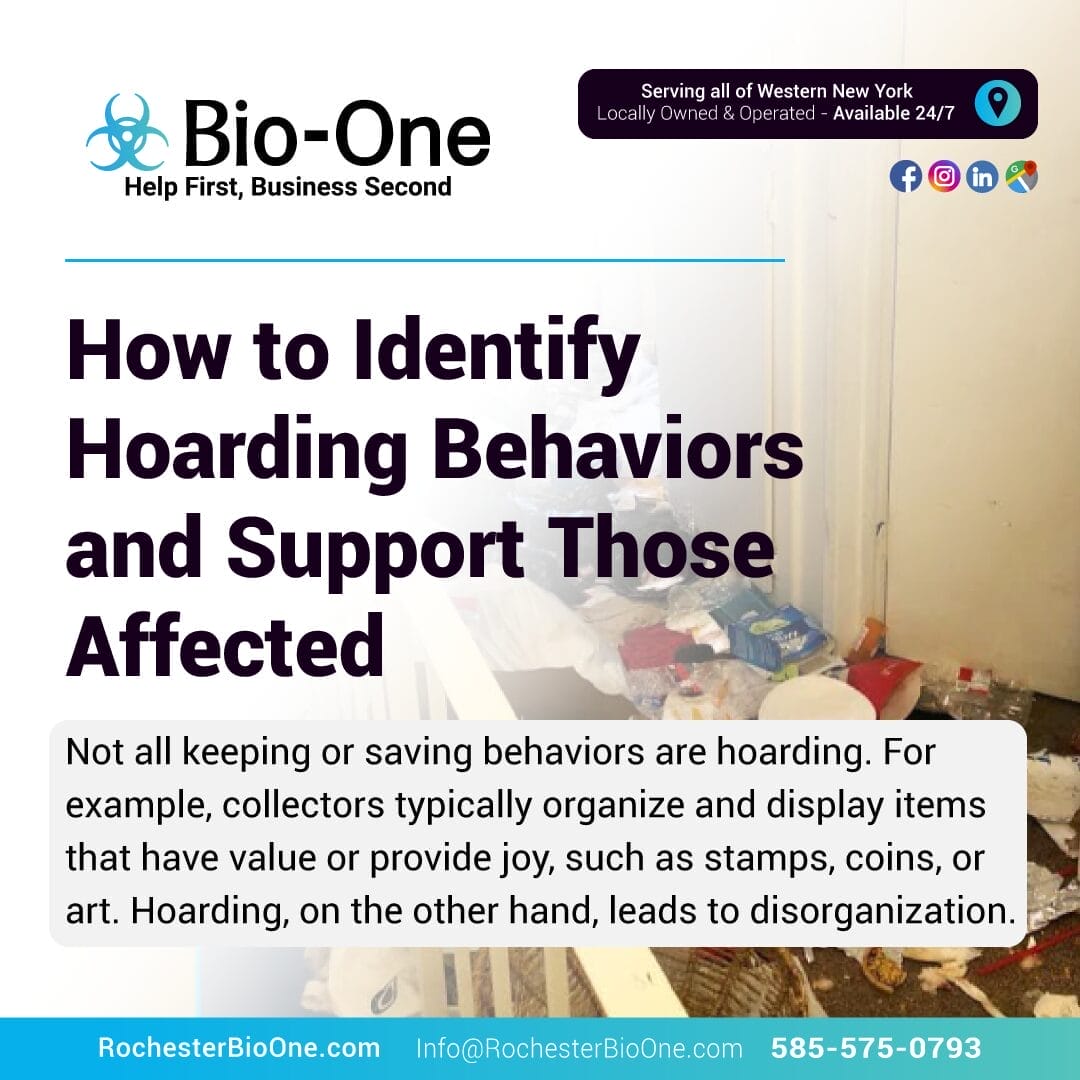
Hoarding is often misunderstood. On the surface, it may seem like someone is merely collecting items or keeping too many possessions for sentimental reasons. However, hoarding is a complex behavior that can deeply affect individuals and their loved ones emotionally, mentally, and physically. This article will take you through the key signs of hoarding, clarify the difference between collecting and hoarding, and provide resources on how to approach this behavior constructively.
Hoarding is not just about clutter or disorganization—it’s a behavioral pattern where an individual accumulates excessive amounts of possessions and experiences difficulty parting with them, regardless of their actual value. Hoarding becomes problematic when it interferes with daily living, safety, and mental wellness. It is officially recognized as a disorder in the Diagnostic and Statistical Manual of Mental Disorders (DSM-5) under Obsessive-Compulsive and Related Disorders.
Not all keeping or saving behaviors are hoarding. For example, collectors typically organize and display items that have value or provide joy, such as stamps, coins, or art. Hoarding, on the other hand, leads to disorganization, overcrowded living spaces, and often distress or shame in showing their environment to others.
Key Differentiators between Collecting and Hoarding:
It's important to recognize hoarding behaviors early to provide the right support. Here are some hallmark signs to look out for.
One of the most prominent behaviors is the inability to throw away possessions, regardless of their usefulness or condition. Even items like old magazines, broken appliances, or empty containers can feel essential to the individual.
Why this happens: Individuals with hoarding behaviors often feel intense anxiety or fear at the thought of disposing of items. Reasons may include emotional attachment, a fear of losing something important, or the belief that the item might be useful someday.
Hoarding typically involves bringing in more possessions than the individual can reasonably use or store. This can include shopping sprees, collecting free items, or bringing in things from the street.
Signs to look out for:
When hoarding behaviors become severe, clutter often spreads to the point where it blocks living areas and makes spaces unusable. For example, a kitchen may no longer function due to piles of items on the counters and stove, or a bedroom bed may be covered with so many possessions that it's no longer usable for sleeping.
Questions to ask:
Hoarding behavior often stems from intense emotional struggles. Many individuals feel embarrassed about their living environment and may avoid inviting others into their homes.
Common emotional signs include:
Overcrowded spaces can lead to serious health and safety issues. For instance, hoarding can increase the risk of falls, create fire hazards, and lead to unsanitary living conditions that may attract pests or mold.
Examples of physical risks from hoarding include:
While hoarding behaviors can seem irrational from the outside, they are often connected to deep emotional needs and past experiences.
Hoarding may stem from underlying mental health conditions such as anxiety, depression, or trauma. For some, acquiring and keeping items provides a sense of control or comfort in response to feelings of chaos or loss.
Common emotional triggers include:
Research indicates that hoarding may also have biological or neurological components. Studies show that brain areas involved in decision-making and emotional regulation may function differently in individuals who hoard.
Approaching someone about their hoarding can be a sensitive matter. It’s crucial to communicate without judgment and provide support rather than criticism.
Hoarding behaviors are deeply tied to emotional and psychological struggles. Provide a listening ear and acknowledge the difficulty the person is experiencing.
What to say:
Instead of emphasizing the mess, focus on safety and health concerns. This can help the person feel less defensive and more open to discussing their behavior.
Hoarding is a serious condition that often requires the help of qualified professionals. Mental health treatments like cognitive-behavioral therapy (CBT) have been shown to help individuals manage their hoarding behaviors.
Helpful Resources
Large-scale cleanup attempts can overwhelm individuals who hoard. Instead, focus on creating small goals like clearing one area or discarding one type of item.
Identifying hoarding behaviors is the first step toward addressing a challenge that can feel insurmountable. Whether you're a mental health professional aiming to provide effective treatment, a family member wondering how to approach a loved one, or someone who recognizes these signs in yourself, know that there are solutions and compassionate resources available.
Remember, progress takes time and patience. Tackling hoarding requires support, understanding, and professional guidance to overcome the emotional roots of these behaviors and build a safer, healthier life.